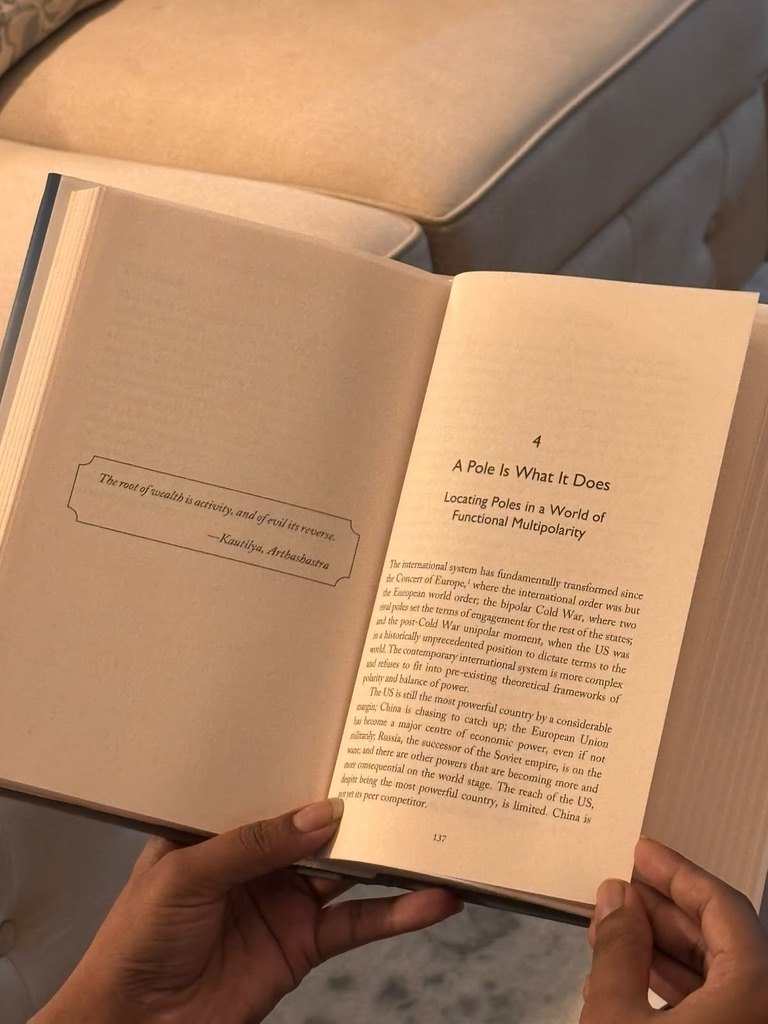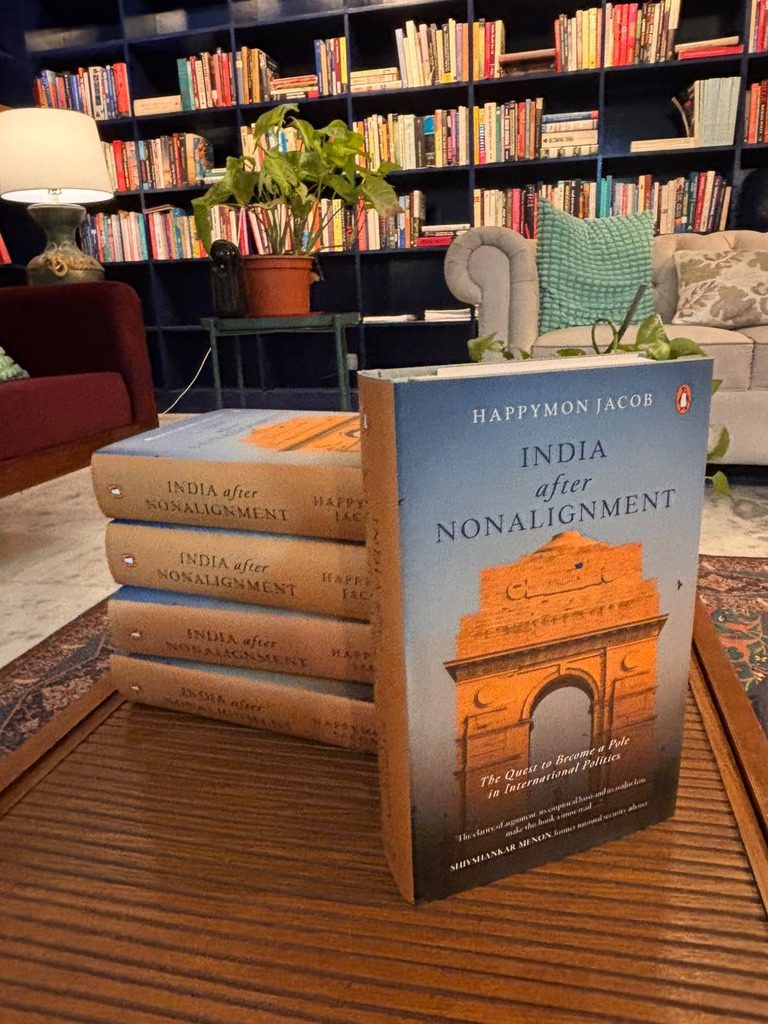
One of the major questions of the day is the readjustment of the relations between Asia and Europe. When we talk of Asia, remember that India, not because of any ambition of hers, but because of the force of circumstances, because of geography, because of history and because of so many other things, inevitably has to play a very important part in Asia. And not only that; India becomes a kind of meeting ground for various trends and forces and a meeting ground between what might roughly be called the East and the West.
Look at the map. If you have to consider any question affecting the Middle East, India inevitably comes into the picture. If you have to consider any question concerning South-East Asia, you cannot do so without India. So also with the Far East. While the Middle East may not be directly connected with South-East Asia, both are connected with India. Even if you think in terms of regional organizations in Asia, you have to keep in touch with the other regions. And whatever regions you may have in mind, the importance of India cannot be ignored
Jawaharlal Nehru, Constituent Assembly, 1947
What does India want? What do Indians think of themselves? As a people? As a country? As a civilization?
What have Indians historically thought of themselves, the wider world and their place in that world? Is this country merely a ‘forever’ rising power? Is it just a vast market and the world’s most efficient back office?
How does the country’s seemingly cantankerous, famously argumentative foreign policy elite, readily given to rhetorical flourish, reconcile their nation’s grandeur with its stubborn, gritty realities of domestic economic underdevelopment and nation-building? There are no easy answers. India resists easy categorization, even for Indians.
Continue readingShow less
Nearly eight decades since Independence, familiar labels such as ‘nonaligned’, ‘strategically autonomous’, ‘multialigned’ capture only part of the story. They describe what India refuses to do. They do not explain why that refusal has been so consistent across vastly different governments, nor what India ultimately wants to become.
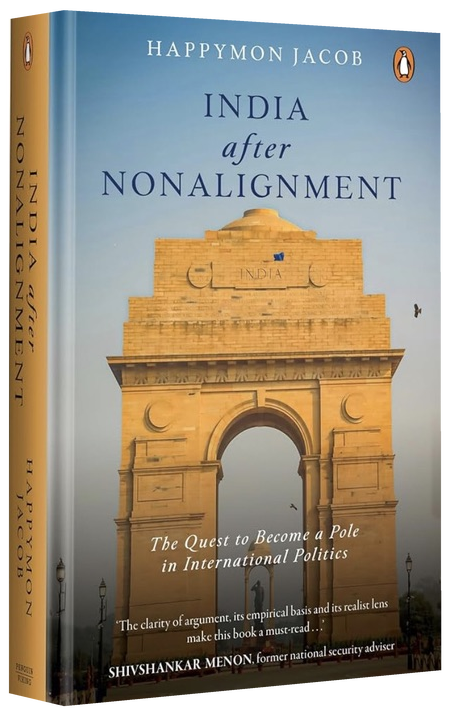
If grand strategy is a state’s theory of how to achieve security and purpose in an anarchic world that guarantees neither, does India have a grand strategy? Grand strategy is also the connective tissue between a country’s sense of itself and the external choices it makes over time. Most states have one, whether or not they call it a ‘grand strategy’, whether or not their leaders frame it as such. India issues no formal national security documents, no foreign policy doctrines and no white papers that announce its strategic intentions to the world. It has never done so and is unlikely to do so anytime soon. It hardly ever tells you what it will do and why it did what it did. Understanding India’s grand strategy is therefore not a literature survey but a careful exercise in intellectual excavation, digging beneath the surface of declared policies, beneath the fog of rhetoric and slogans, to find the durable logic underneath. India announces itself more through refusals than declarations, and it has done so for a century. And yet, running beneath those refusals and defiance, India has, I argue, a consistent theory of its place in the world. This book is an attempt to give it a name.
The overwhelming temptation, particularly among Western observers of India, is to reach for explanations such as postcolonial sensitivity, institutional risk-aversion, a political class more comfortable with the rhetoric of independence than with its responsibilities and so on. These explanations, however, mistake the symptom for the cause.
Consider this: eight decades and a dozen governments with wildly different ideological persuasions, and leaders drawn from every nook and corner of this vast country—men and women who often could not even speak each other’s language—but India’s approach to the world persists. Such a stubborn consistency does not come from confusion or mere defensiveness, but from a quiet conviction about what this country is and what it must remain. As a subconscious inbuilt category.
Successive governments in New Delhi have refused military alliances. They have avoided choosing sides even when the country needed, and knew it needed, strong military partnerships to meet emerging strategic challenges. A chaotic, multipolar world is not necessarily the best guarantee of India’s security against Chinese aggression, nor the surest path to its own economic growth. Yet, India remains a devout believer in a multipolar order. When pressed to choose sides—as it was during the Russia-Ukraine war—Delhi stood its ground. It could have publicly aligned with the most advantageous side while privately signalling to the other that its public stance was tactical. It chose not to, incurring costs instead.
What explains such decisions?
One could call India confused. That would be analytically lazy. One could call it nonaligned. That too would be lazy. One could argue that India doesn’t think strategically, as some have indeed argued. That reflects Western condescension towards non-Western strategic thought more than it reflects the reality of the country. The India story is more complex and older.
I argue in this book that Indians, for at least a hundred years, have thought of their country as a pole in international politics. Not just another rising power, swing power or great power but a pole. Being a ‘pole’—an intuitive, subconscious and deeply wired psychological category—is the primary lens through which Indians have conceptualized national power, practised it and used it to engage the world. For its leaders and thinkers, now as it was a century ago, the claim to be a pole is an argument from national positionality. It is an identity that persists notwithstanding whether it aligns with the country’s material realities on the ground or how the outside world views it. While Indians, like any people, seek external validation, their core self-perception remains paradoxically insulated from it: India’s sense of its place in the world is not dependent on what the world thinks of it.
If you look at India from the outside as a developing country unwilling to fit the mould, it will come across as a noisy rebel refusing to grow up or even annoyingly cantankerous. But viewed as a nation seeking to emerge as a pole against all odds, the friction fades. It all starts making sense. In the latter view, India is not a flimsily argumentative prickly rebel, a postcolonial state with a famously thin skin or the leader of some revisionist camp conspiring to undo the world order created by the Euro-Atlantic powers; rather, its actions are a function of a sense of self-conceived and self-sustained destiny.
Understanding India, then, is not a matter of gathering more data, travelling more widely in India or talking to more Indians—it is a matter of seeing differently.
If Indians have thought of their country as a pole in international politics for at least a century, what is new now? Why retell that story now? Why this book?
Continue the Introduction in the book. Buy your copy
From India after Nonalignment by Happymon Jacob, © Happymon Jacob 2026, published by Penguin Viking.